
Inventory & Material Management
Simplify Inventory Management
Materials management plans and controls inventory and production requirements to ensure that resources are available when needed to meet production schedules. This material planning includes the management of logistics, stock levels, material quality, pricing, and other considerations.
How it works
TAG ITEMS
Radio-Frequency Identification labels are used to identify inventory and items. Depending on the business case, radio-frequency identification labels may only be attached to the greatest unit of measurement, such as a pallet. In other scenarios, the labels could be attached to specific products or cases. Every Radio-Frequency Identification label contains a serial number. Using a Radio-Frequency Identification printer, the printing and encoding of RFID labels is frequently automated.

RFID READER
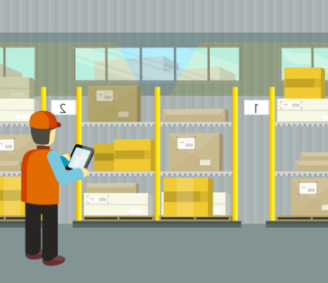
Strategic Radio-Frequency Identification read points throughout the warehouse and distribution centre collect data on goods movement. Radio-Frequency Identification handhelds can also be used to perform cycle counts or physical inventory counts. The key advantage of data collection over a barcode or manual count is its speed.

DATA COLLECTION
The data gathered could be useful in business interactions such as monitoring inventory levels or tracking inventory levels throughout a facility. Furthermore, the ability to do cycle counts and physical inventory counts in a more cost-effective and efficient manner provides immediate information on deviations.
Valuable Workflows
AUTOMATE CYCLE COUNTS/ PHYSICAL INVENTORY COUNTS
RFID handhelds can help you count your inventory fast and precisely. Choose between a guided (see variances while scanning) and blind count (just see what has been counted).
INVENTORY TRACKING
Utilise strategic read points to capture inventory movement as it moves throughout your facility. This can be seen at the Dock Door, as well as in pick lanes and staging locations.