
Uniforms, Garments and Linens
Improve Your Inventory Operations using RFID
Because uniforms, clothing, and linens are frequently replaced, they might be difficult to organise and keep track of. However, in order to achieve operational goals, it is vital to be able to retain enough inventory on hand. Radio-Frequency Identification (RFID) is used to quickly count goods and collect valuable data as it moves through its life cycle.
How it works
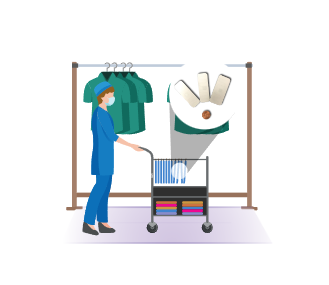
TAG ITEMS
Clothing, bedding, and uniforms are all equipped with radio-frequency identification tags. The method of attaching the Radio-Frequency Identification tag varies based on the type of inventory. Some ways include heat sealing, stitching, or inserting the tag. The concept is that Radio-Frequency Identification will provide the inventory with a unique identifier.
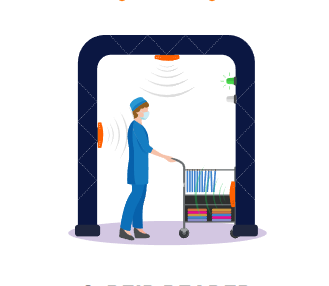
RFID READER
Handheld or stationary RFID readers capture the movement of the uniform, line, or garment as it performs its duty. Portable radio-frequency identification devices, for example, can be used to scan things in a space and provide an inventory snapshot. Fixed readers can scan goods bins as they are sent to and returned from the wash.

DATA COLLECTION
As you collect data, determine how each item is used as quickly as possible. When an inventory is sent out, you should be able to check whether anything is missing right away. During inventory, look for any differences, such as matching, missing, extra, or misplaced items.
Valuable Workflows
CHECK-IN / CHECKOUT
Manage the check-in and checkout process efficiently and collect intelligent data fast and correctly. Beyond RFID, collect other sensory data such as GPS. Recognise things that have not been returned. Pull reports on overdue items when checking out to users.
CYCLE COUNTS
Using a simple yet powerful cycle count, cross-check that the objects in storage match what’s in the system. Determine what items are missing or lost and take immediate action. RFID makes efficient item counting possible.